Apartment Moving in LA: Complete Checklist
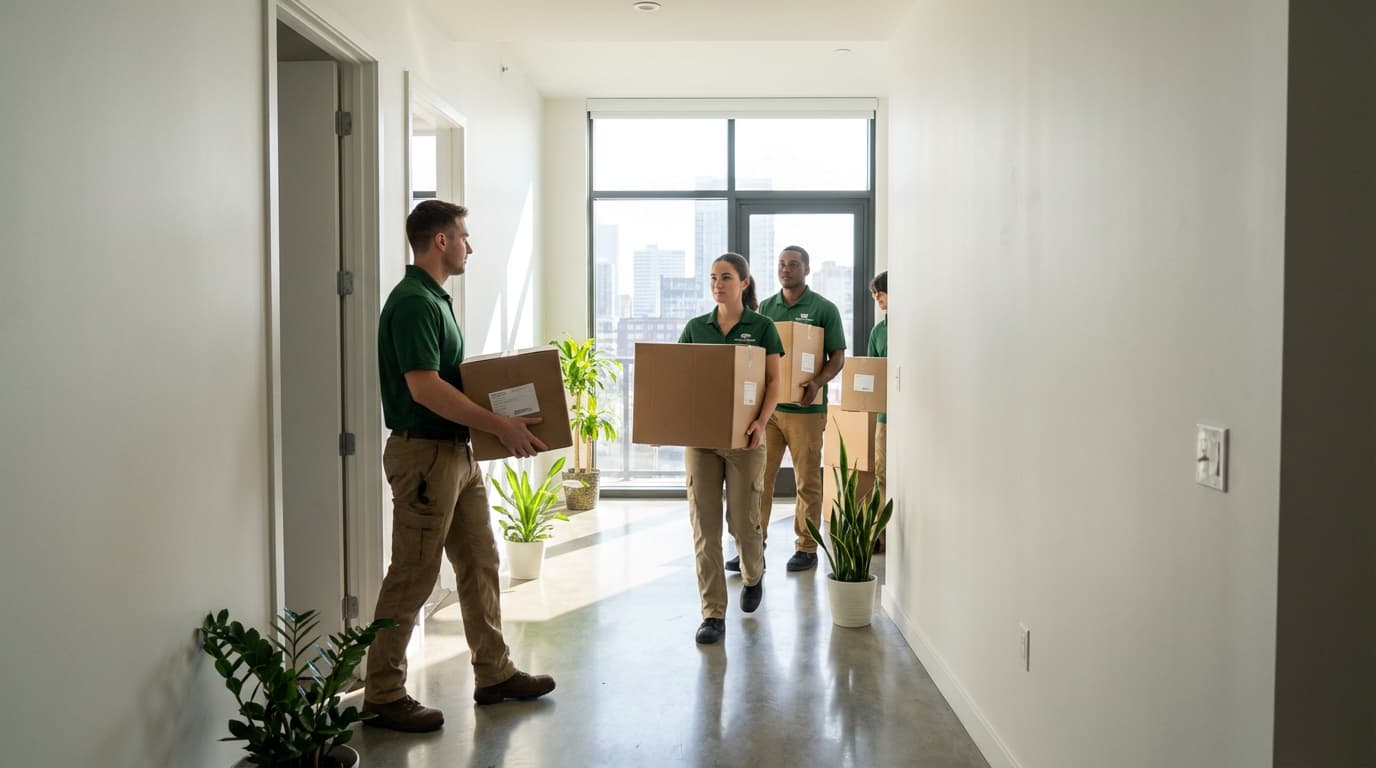
Two weeks ago I got a panicked call at 7 AM from a client in a Koreatown high-rise. Her movers had arrived on schedule, loaded up the freight elevator — and then building management shut them down. No elevator reservation on file. The building required 72-hour advance booking plus a $500 refundable deposit, and nobody had told her. The crew sat idle for three hours while she scrambled to get emergency approval from the property manager, and those three hours went on the clock. A move that should have cost $700 ended up at $1,150 — all because of one missed step.
This is the reality of apartment moving in LA. It's not just packing boxes and hiring a truck. It's freight elevator reservations, loading zone permits, building insurance requirements, parking coordination, and a dozen building-specific rules that vary from one complex to the next. I'm Julia, a Personal Moving Consultant at Green Moving, and I talk to LA apartment renters every single day. This checklist is everything I've learned from hundreds of apartment moves across every neighborhood in the city — the steps most people miss and the ones that save you real money and real stress.
6 Weeks Out: Lock Down the Big Decisions
Give written notice to your landlord. California law requires 30 days' notice for month-to-month leases. If you're breaking a fixed-term lease, check your agreement for early termination clauses and fees. Always give notice in writing — email is fine, but follow up with a physical letter if your lease specifies written notice. Keep a copy.
Book your moving company. In LA, good movers book up 2–3 weeks in advance during busy months (summer and month-end periods). For apartment moves specifically, you want a company experienced with high-rise and walk-up logistics. A crew that's only done suburban house moves will be slower and more frustrated navigating narrow hallways, freight elevators, and loading docks. Request a quote from us at Green Moving — we handle apartment moves across LA County daily.
Contact your building management — both buildings. This is the step that catches people. You need to coordinate with your current building AND your new building. Ask each one:
What is the freight elevator reservation process and lead time? Is there a move-in/move-out fee or refundable deposit? What hours are moves allowed? Is a certificate of insurance (COI) required from the moving company? Are there loading zone or parking restrictions? Does the building require floor and wall protection during the move?
Write every answer down. Share the requirements with your moving company immediately so they can prepare COIs, schedule around building hours, and plan crew size accordingly.
4 Weeks Out: Paperwork and Permits
Apply for street parking permits if needed. Many LA apartment buildings don't have dedicated loading zones. If your building's loading area is street-level on a public road, you may need a temporary no-parking permit from LADOT. These cost about $25–$40 and require 7–10 business days to process. The permit allows you to place "No Parking" signs along the curb in front of your building, reserving space for the moving truck.
In neighborhoods like Hollywood, West Hollywood, Koreatown, and DTLA, this isn't optional — it's essential. Without reserved curb space, your moving truck has nowhere to park, and the crew is carrying furniture an extra 100–200 feet from wherever they can find a spot. That adds hours and dollars.
Submit your COI requests. Most mid-rise and high-rise buildings in LA require your moving company to provide a Certificate of Insurance naming the building or management company as additionally insured. At Green Moving, we issue COIs same-day — but some companies take a week or more. Don't wait.
Schedule your utility transfers. DWP for electricity and water, SoCalGas for gas, and your internet/cable provider. For DWP, you can schedule final reads and transfers online. Pro tip: schedule your internet installation at the new apartment a day or two before your move so you're connected when you arrive. LA internet installers (especially Spectrum and AT&T) often have 1–2 week lead times.
Arrange renter's insurance. If you don't already have it, your new building may require proof of renter's insurance before handing over keys. Policies are cheap — $15–$30/month through Lemonade, State Farm, or USAA — and they protect your belongings during the move itself too.

🏢 Moving apartments in LA? Building logistics can make or break your move — let us handle the coordination. Call (949) 266-9445 or request a free quote. Our local moving crews specialize in LA apartment moves, from walk-ups to high-rises.
2 Weeks Out: Pack Smart for Apartment Life
Apartment packing is different from house packing because of one constraint: everything has to fit through narrow doorways, down tight hallways, and into an elevator. Here's how to approach it:
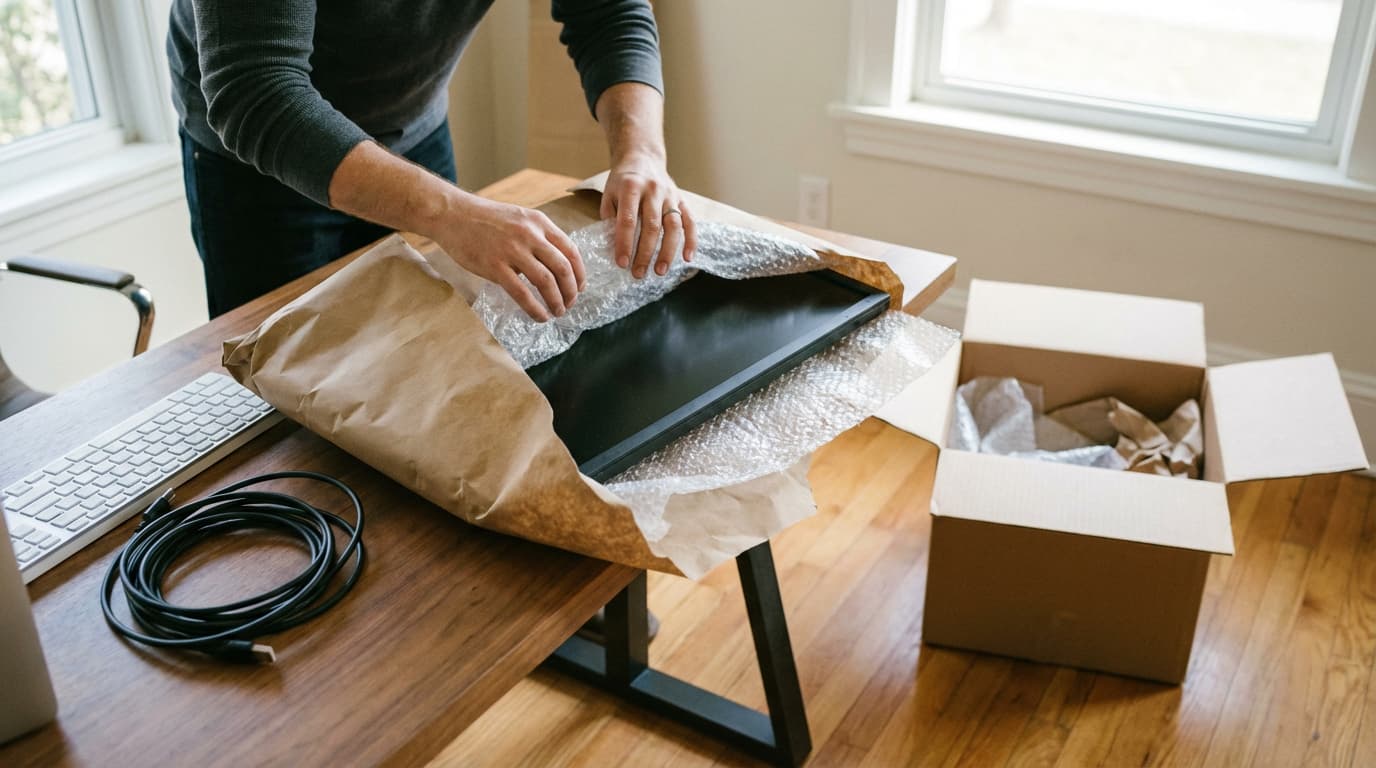
Pack heavier, smaller boxes. The temptation is to use large boxes for everything, but large boxes full of books or kitchen items are impossible to maneuver through a 32-inch apartment doorway while turning a corner. Use small boxes for heavy items (books, dishes, tools) and medium boxes for lighter bulk items (linens, clothing, pillows). Save large boxes for lampshades, comforters, and lightweight awkward items only.
Disassemble everything you can. Bed frames, IKEA shelving units, dining tables with removable legs, desk hutches — take them apart now, not on moving day. Bag all hardware in labeled zip-lock bags and tape them to the corresponding furniture piece. A fully assembled KALLAX shelf doesn't fit through most LA apartment hallways. A disassembled one stacks flat and moves in seconds.
Number your boxes by room and priority. At the new apartment, you want the kitchen and bathroom boxes in first, bedroom boxes second, everything else third. Number each box sequentially within its room (Kitchen 1 of 8, Kitchen 2 of 8, etc.). When the crew is stacking boxes in the elevator and carrying them down the hall, clear labels prevent chaos. For more packing strategies, check our guide on packing a kitchen — the techniques apply to every room.
Purge before you pack. Every item you eliminate is one less thing to carry down the stairs, fit in the elevator, and unpack at the new place. LA has excellent donation options — Goodwill, Salvation Army, and Habitat for Humanity ReStore all do free pickups for large items. Our article on what to donate before moving has a complete room-by-room guide.
1 Week Out: Final Confirmations
This is the week where most apartment moves either come together or fall apart. Run through this list:
Confirm your freight elevator reservation. Call the building — don't assume it's still on the calendar. Get the name of the person who confirmed it. If your building uses a property management company like Greystar or Essex, call the on-site office directly, not the corporate number.
Confirm your moving company details. Arrival time, crew size, truck size, building access requirements, COI delivery, parking plan. At Green Moving, our dispatcher confirms all details 48 hours before every move — but not every company does this. Be proactive.
Do a final walkthrough of both apartments. At your current place, check closets, cabinets, storage units, and the garage (if applicable) for items you may have forgotten. At your new place, confirm that the unit is move-in ready — clean, repaired, keys available, and parking spot assigned.
Prepare your essentials box. This is the last box you pack and the first one you open. It goes in your personal car, not the truck. Contents: phone charger, laptop, toiletries, change of clothes, medications, snacks, water bottles, paper towels, toilet paper, basic tools (screwdriver, Allen keys), and your lease/move-in documents. When everything else is buried in boxes at the new apartment, this bag keeps you functional.
Moving Day: Hour-by-Hour Apartment Protocol
Before the crew arrives:
Clear a path from your front door to the elevator (or stairs). Move any shoes, mats, or hall furniture out of the hallway. If your building requires floor protection, lay down the mats or cardboard runners now. Prop your apartment door open with a doorstop.
If you're on a walk-up above the 2nd floor, clear the stairwell of any personal items (bikes, strollers, shoe racks). Your neighbors' stuff in the common stairwell is their problem, but flag it for the crew so they can navigate around it safely.
When the crew arrives:
Walk them through the apartment and point out fragile items, disassembly needs, and any items that aren't going (stuff you're leaving for the landlord or donating separately). Show them the elevator, loading zone, and truck parking location. Introduce them to the building doorman or security if applicable.
During the move:
Stay available but out of the way. The biggest time-killer on apartment moves is the resident standing in the doorway asking the crew questions while they're carrying a dresser. If you need to communicate something, wait until they set the item down. Keep your phone on — the crew lead may call you from the truck or the new apartment with questions about placement.
At the new apartment:
Be there before the truck arrives. Have the elevator reserved, the door propped, and floor protection down. Direct the crew on box placement by room — "Kitchen boxes in the kitchen, bedroom boxes in the bedroom" sounds obvious, but without direction, everything ends up in the living room in one pile.
The Deposit Recovery Checklist
Your security deposit in California can be up to one month's rent (unfurnished) or two months' (furnished). Getting it back requires documentation and specific steps:
Photograph every room before you leave. Walls, floors, appliances, fixtures, windows. Take wide shots and close-ups. Include timestamps. This is your evidence if the landlord claims damage that wasn't yours.
Patch small nail holes. California law says normal wear and tear isn't deductible from your deposit, but landlords often try. A $5 tube of spackle and 10 minutes of work removes the argument entirely. Fill holes, smooth with a putty knife, wipe clean.
Clean thoroughly. Stove, oven, refrigerator (inside and out), bathroom, floors, windows. A landlord can legally deduct cleaning costs if the unit isn't returned in the condition it was received. A 2-hour deep clean saves you $200–$400 in deductions. If you don't have time, hire a cleaning service — $150–$250 for a standard apartment.
Return all keys, remotes, and access devices. Get a written receipt or confirmation email. Missing keys can cost $100–$300 in lock replacement charges deducted from your deposit.
Request your deposit in writing. California landlords have 21 days to return your deposit with an itemized statement of any deductions. If they don't, they owe you the full amount. Send your forwarding address in writing on your last day.
Walk-Up vs. High-Rise: What Changes
The logistics differ significantly between building types, and this affects your moving cost:
Walk-up (no elevator): Every item goes up or down the stairs by hand. A 3rd-floor walk-up adds 30–45 minutes to a 1-bedroom move compared to a ground-floor unit. Most moving companies charge a per-flight stair fee — typically $50–$75 per flight — or factor the additional time into an hourly estimate. If you're above the 3rd floor with no elevator, expect your move to cost 20–30% more than an identical ground-floor job.
Protect the stairwell. Narrow LA stairwells (common in 1950s–70s buildings in Hollywood, Silver Lake, and Echo Park) get scratched and dented during moves. If your building doesn't provide wall protection, ask your moving company to use corner guards and blanket wraps on stairwell turns.
High-rise (freight elevator): Elevator moves are faster per floor but come with scheduling constraints. Most buildings allow one freight elevator reservation per day per unit, and the window is typically 4–6 hours. If your move runs long, you lose the elevator and everything stops. Plan conservatively — if you think you need 4 hours, book 6.
Elevator dimensions matter. Measure the freight elevator's interior height, width, and depth before move day. Some LA high-rises (especially older DTLA buildings) have freight elevators that won't fit a king-size mattress standing up or a sofa turned on end. Your crew needs to know this in advance to plan their loading sequence.
The LA-Specific Apartment Moving Quirks
A few things that are unique to apartment moving in Los Angeles that you won't find in any generic moving checklist:
Rent-controlled buildings (RSO units) have specific rules about when landlords can access your unit and what condition they can require at move-out. Know your rights under LA's Rent Stabilization Ordinance before your landlord's walkthrough.
Street sweeping tickets. LA's street sweeping schedule is merciless. If your moving truck is parked on a street sweeping day during the posted hours, it gets a $73 ticket. Check the signs on both the origin and destination streets and plan your truck timing accordingly.
Gate codes and building access. Many LA apartment complexes have gated parking garages with height restrictions. A standard moving truck is 12–13 feet tall. Most parking garage clearances are 7–8 feet. Don't assume the truck fits underground. Confirm the clearance in advance and plan for street-level loading if needed.
Green Moving commits 1% of every move to California environmental causes, and apartment moves are inherently more eco-efficient than house moves — shorter distances, smaller loads, and less fuel per move. When you choose a responsible moving company for your apartment relocation, the environmental footprint is already lighter.
FAQ
How much does it cost to move a 1-bedroom apartment in LA? A standard 1-bedroom apartment move within LA County with 2 movers and a truck runs $450–$750, typically taking 3–4 hours. Walk-ups above the 2nd floor add $50–$75 per flight. High-rises may require additional time for elevator logistics. Peak-season weekends (summer, month-end) cost 10–15% more than midweek moves.
Do I need to reserve the freight elevator for my move? Yes, in almost every mid-rise and high-rise building in LA. Most require 72 hours to 2 weeks advance notice, and many charge a refundable deposit ($250–$500). Contact your building management as early as possible — elevator slots fill up fast at the beginning and end of each month.
How do I get a parking permit for a moving truck in LA? Apply through LADOT for a temporary no-parking permit. The process takes 7–10 business days and costs $25–$40. The permit allows you to post "No Parking" signs on the curb in front of your building, reserving space for the truck. This is especially important in dense neighborhoods like Koreatown, Hollywood, and DTLA.
Can I get my full security deposit back when moving out in California? California law requires landlords to return your deposit within 21 days with an itemized deduction statement. Normal wear and tear (small nail holes, minor carpet wear) is not deductible. Document the unit's condition with photos, clean thoroughly, and return all keys with written confirmation to maximize your recovery.
How long does a typical LA apartment move take? A studio or 1-bedroom takes 2–4 hours. A 2-bedroom takes 4–6 hours. These estimates assume a ground-floor or elevator-accessible unit. Walk-ups, limited parking, or large furniture that requires disassembly can add 1–2 hours. Building elevator restrictions may also extend the timeline if your slot is limited.
Moving apartments in LA? Green Moving handles everything from studio walk-ups to penthouse high-rises — elevator coordination, parking permits, building requirements. Call (949) 266-9445, email sales@greenmovingla.com, or get your free quote. Licensed & insured — CAL-T 201327.