Summer Moving in LA: Survival Guide
- Why Summer Is LA's Toughest Moving Season
- Book Early or Pay the Premium
- The 6 AM Strategy: Start Before the Heat
- Protect Heat-Sensitive Belongings
- Hydration Isn't Optional — For Anyone
- Navigate Summer Traffic Like a Local
- What to Do If You're Stuck With an Afternoon Move
- Summer Moving Budget: Where the Money Really Goes
- The Eco-Friendly Summer Advantage
- Your Summer Moving Countdown
- FAQ
Last August, I got a call from a client — a young couple relocating from a third-floor walkup in Silver Lake to a townhouse in Culver City. They'd booked their move for 1 PM on a Saturday. By the time our crew arrived, the thermostat on their porch read 104°F. Their chocolate candles had melted into the box. The vinyl records they'd carefully packed had warped. And they were standing in the doorway looking like they wanted to cancel the whole move and just stay put forever. That afternoon taught me something I now tell every client who calls between May and September: summer moving in LA is a completely different game, and if you don't plan for the heat, the heat plans for you.
I'm Julia, a Personal Moving Consultant at Green Moving, and I've helped hundreds of families navigate LA's brutal summer moving season. In this guide, I'm giving you everything I've learned — the scheduling tricks, the packing hacks, the budget strategies — so your summer move goes smoothly even when the thermometer doesn't cooperate.
Why Summer Is LA's Toughest Moving Season
Everyone wants to move in summer. School's out, leases turn over July 1 and September 1, and people assume sunshine means easy moving weather. But in Los Angeles, summer means something specific: triple-digit heat waves in the Valley, bumper-to-bumper traffic on the 405 and the 101, and every moving company in the city booked solid from mid-June through Labor Day.
The result? Prices go up, availability goes down, and the physical demands on both you and your movers skyrocket. I see more damaged items, more heat-related delays, and more stressed-out clients between June and September than the entire rest of the year combined. The good news is that nearly all of these problems are preventable — if you know what's coming.
Book Early or Pay the Premium
Here's the pricing reality. During off-peak months (October through April), you can usually book a crew within a week or two. In summer, our calendar fills up 3–4 weeks in advance, and weekends in July are often fully booked by mid-June.
The rate difference is real too. A standard weekday move with 2 movers and a truck runs around $150–$170/hour during normal months. In peak summer, demand pushes pricing toward the higher end across the industry, and weekend slots carry an additional premium. If you want a Saturday in July, you're competing with every lease-turner in LA County.
My advice: book at least 3–4 weeks ahead. If you have any flexibility on your date, a Tuesday or Wednesday move can save you real money compared to a weekend. Even shifting from a Saturday to a Friday makes a difference. Check out our pricing page for current rates and request a quote early — once the calendar fills, it fills.
The 6 AM Strategy: Start Before the Heat
This is the single most important tip I give to summer clients: start your move as early as humanly possible. In LA, temperatures are usually manageable until about 10–11 AM, even during heat waves. By noon in neighborhoods like Woodland Hills, Encino, or Pasadena, you're looking at 95°F+. By 2 PM, it's dangerous.
Our crews that start at 7 or 8 AM in summer can often finish a one-bedroom apartment move before the worst heat hits. For larger homes — 3 bedrooms and up — an early start means the heaviest lifting (sofas, dressers, appliances) happens in cooler temperatures, which is safer for the crew and better for your belongings.
Talk to your building management about early elevator reservations if you're in a high-rise. Most Downtown LA and Koreatown buildings require advance booking for freight elevators, and securing that 7 AM slot can make or break your timeline.
Protect Heat-Sensitive Belongings
This is where summer moves get expensive if you don't plan ahead. I've seen it all — warped vinyl records, melted candles pooled into clothing boxes, cracked wooden instrument cases, spoiled pantry items, and electronics that overheated in a sealed truck.
Here's my heat-sensitive checklist:
Take with you in your air-conditioned car: Medications, cosmetics and skincare, important electronics (laptops, hard drives), wine and alcohol, chocolate and perishable food, houseplants, candles, and anything made of wax or soft plastic.
Pack last, load first, unload first: Artwork, vinyl records, musical instruments, and anything with wood veneer or laminate finishes. These items should spend the minimum possible time inside the truck.
Use insulated protection: Wrap temperature-sensitive items in moving blankets or insulated bubble wrap. For wine collections or anything truly irreplaceable, consider our White Glove Services — the crew uses climate-aware handling and specialty crating.
One thing people forget: the inside of a closed moving truck can reach 140°F+ in direct LA sun. Even with good packing, time is the enemy. The faster items get from one air-conditioned space to another, the better.
☀️ Planning a summer move in LA? Don't wait until July to book — our calendar fills fast during peak season. Call us at (949) 266-9445 or request a free quote to lock in your date. Our local moving crews know how to handle the heat.
Hydration Isn't Optional — For Anyone
I bring this up because I've seen clients collapse from heat exhaustion on moving day. Not the movers — the clients. Professional crews know how to pace themselves and hydrate, but homeowners who are running up and down stairs, packing last-minute boxes, and directing traffic in the driveway often forget to drink water.
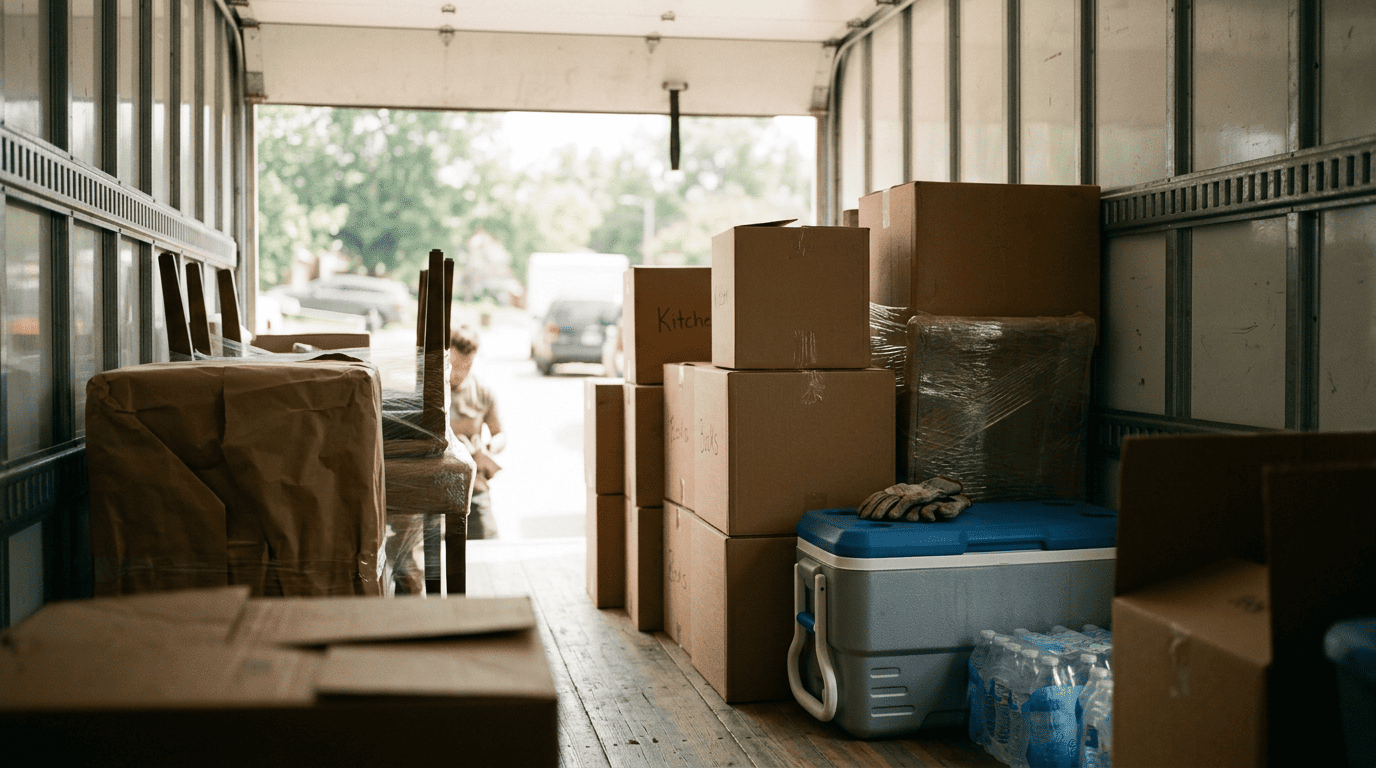
Here's what I tell every summer client: set up a hydration station before the movers arrive. A cooler with ice water, sports drinks, and cold towels near the front door. Your movers will be grateful, and you'll be protecting yourself too. Have sunscreen available. Keep the AC running in the house as long as possible — yes, even with the doors propped open for loading. The electric bill is worth it compared to a heat-related emergency.
If you have elderly family members, small children, or pets at home during the move, designate one air-conditioned room as a "cool zone" and keep them there until it's time to leave. Pets especially are vulnerable — I've worked moves where the family dog was panting dangerously in the chaos. Plan for it.
Navigate Summer Traffic Like a Local
A 15-mile move in LA can take 45 minutes or 3 hours depending on when you're on the road. In summer, traffic patterns shift because of vacations, beach traffic, and construction season (CalTrans loves scheduling road work in dry weather).
Rules I've learned from years of routing LA moves:
Avoid the 405 between LAX and the Valley after 10 AM on any summer day. Beach traffic heading to Santa Monica and Manhattan Beach creates gridlock that doesn't clear until evening. If you're moving from the Westside to the Valley, use Laurel Canyon or Coldwater Canyon instead — they're slower but more predictable.
The 101 through Hollywood is a parking lot from noon to 7 PM. If your route crosses Hollywood, plan for surface streets through Los Feliz or take the 2 to the 5.
PCH is a trap on summer weekends. If you're doing a coastal move — Malibu to Santa Monica, or any Pacific Palisades route — go Saturday at 7 AM or wait until after 6 PM.
Our dispatchers route summer moves based on real-time traffic patterns, which is one reason an experienced local moving company makes a difference versus a DIY rental truck where you're figuring out routes on the fly.
What to Do If You're Stuck With an Afternoon Move
Sometimes you can't avoid it. Your lease ends at noon, the elevator is only available from 2–5 PM, or the only date available is a Saturday afternoon in August. It happens. Here's how to minimize the damage:
Pre-pack everything. When the crew arrives, every single item should already be boxed, wrapped, and ready to carry. Zero packing time on-site means less time in the heat for everyone. If you need help getting organized in advance, our packing services team can come the day before and have everything move-ready.
Create shade at both locations. Pop-up canopies near the truck loading zone can drop the perceived temperature by 10–15 degrees. If your new place has a garage, have the crew load directly into the garage rather than through the front entrance.
Stage items by weight. Heavy furniture and appliances should be positioned closest to the door so they move first, while movers are freshest. Lighter boxes can come last.
Build in buffer time. Afternoon summer moves take 15–20% longer than the same move in October. Factor that into your budget and your expectations. It's not that the crew is slow — it's that safe heat management requires more breaks.
Summer Moving Budget: Where the Money Really Goes
Let me break down the real cost differences for a typical 2-bedroom apartment move within LA County:
Off-peak (October–April), weekday: 2 movers + truck, approximately 4–5 hours, total usually runs $600–$850.
Peak summer (June–August), weekend: Same move, but you're more likely to need the premium weekend slot. The job itself may also take longer due to heat breaks, potentially adding an extra hour. Realistic budget: $800–$1,100.
The hidden summer costs people don't expect: replacement of heat-damaged items (I've seen $200+ in melted/warped goods from a single poorly packed box), premium parking permits in beach-adjacent neighborhoods that charge more in summer, and temporary storage if your move-in date doesn't align (summer lease gaps are the most common — check out the storage options guide we published for strategies).
The smartest budget move? Shift your date by even a few days. A Wednesday move in July can save $150–$250 compared to that same Saturday — and by the way, that savings easily covers having our team professionally pack your kitchen the day before.
The Eco-Friendly Summer Advantage
Here's something I love about summer moves: it's actually the easiest season to go green. Longer daylight hours mean our crews can complete moves using natural light, reducing energy use. Warm temperatures are perfect for using reusable plastic bins instead of cardboard (cardboard weakens with sweat and humidity). And because we're running at peak volume, our dispatchers optimize truck routes to minimize empty miles between jobs.
Green Moving commits 1% of every move to California environmental causes, and during summer we see clients get inspired to declutter more aggressively before the move — donating furniture and clothing to local LA charities rather than hauling items they don't need to the new place. It's a win-win.
Your Summer Moving Countdown
If you take one thing from this guide, make it this timeline:
6 weeks before: Book your moving date. Research rates and lock in a crew. Summer calendars fill fast.
4 weeks before: Start packing non-essentials. Order supplies. Schedule elevator reservations for high-rises.
2 weeks before: Pack heat-sensitive items with extra protection. Confirm your moving time (push for early morning). Set up mail forwarding and utilities transfer.
1 week before: Pack remaining rooms. Prepare a cooler and hydration supplies. Check the 10-day weather forecast for heat advisories.
Moving day: Start early. Hydration station ready. Heat-sensitive items go in your personal car. Tip your crew — they earned it.
For a complete week-by-week breakdown, check our Ultimate 8-Week Moving Checklist — it pairs perfectly with this summer-specific guide.
FAQ
How much more expensive is moving in summer in Los Angeles? Summer moves in LA typically cost 15–25% more than off-peak months, depending on the specific date and day of the week. Weekend moves in July and August see the highest demand. Booking early and choosing a weekday can bring costs closer to off-peak rates.
What is the best time of day to move in LA during summer? Start as early as possible — ideally between 6 and 8 AM. Morning temperatures in most LA neighborhoods are 15–25 degrees cooler than afternoon peaks. Early starts also help you avoid the worst traffic on major freeways like the 405 and the 101.
Can summer heat damage my furniture during a move? Yes. The interior of a closed moving truck can exceed 140°F in direct sunlight. Wood veneer can crack, leather can dry and split, and electronics can overheat. Professional movers use moving blankets and strategic loading to minimize exposure, but keeping truck time short is the best protection.
Should I keep the AC running on moving day even with doors open? Absolutely. Keeping the air conditioning on in both your old and new home maintains a cooler environment for staging items and gives everyone a place to cool down. The electricity cost is minimal compared to heat-related risks to your belongings and your health.
What items should I transport in my own car during a summer move? Carry medications, electronics, important documents, wine, candles, cosmetics, perishable food, houseplants, and anything made of wax or temperature-sensitive materials in your air-conditioned car. These items should never sit in a closed truck in summer heat.
How far in advance should I book a summer move in LA? Book at least 3–4 weeks in advance, and 5–6 weeks if you need a weekend date in July or August. Popular dates sell out by mid-June. Contact us early at (949) 266-9445 to secure your preferred slot.
Ready to book your summer move? Green Moving has been helping LA and Orange County families beat the heat since 2022. Call us at (949) 266-9445, email sales@greenmovingla.com, or get a free quote online. Licensed & insured — CAL-T 201327.